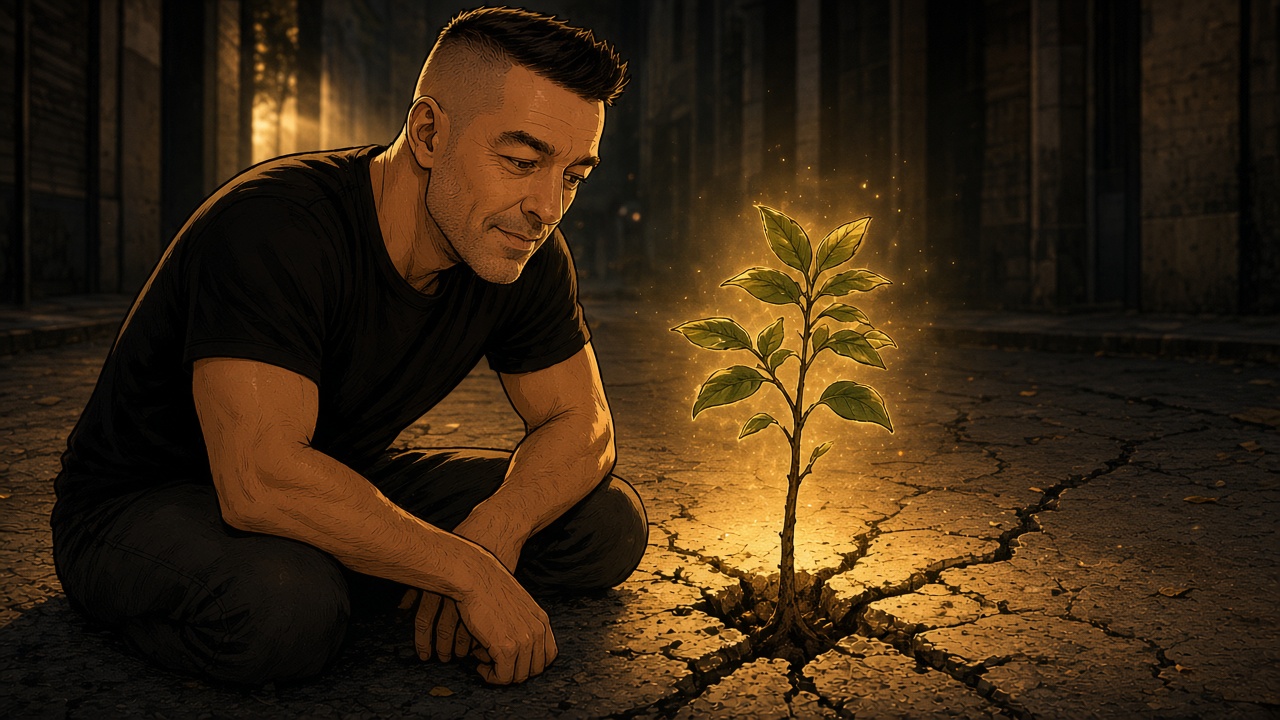
Heartbreak can make you or break you.
I mean that literally. The same pain that sends one man into years of drinking, bitterness and drift can become, for another man, the seed of the best thing he ever builds. Your greatest disappointments are very often the starting point of your greatest wins. I’ve found that to be true in my own life.
I’m not one of those guys who pretends he feels nothing when a relationship ends. Everybody feels it at some point. A lot of the time it’s not a big deal; you’re a bit sad, and you move on. But sometimes it cuts deep. Sometimes it knocks you flat.
This post is about those times: what happened to me, why it hurts so much, and how to make sure the pain builds you instead of breaking you.
My Story: The Breakup That Took a Year from Me
Back in 2015, around the middle of the year, I went through a bad breakup with a woman I cared about deeply.
The ironic part is that I was the one who ended it. And I ended it for reasons that weren’t good ones. I won’t pretend otherwise.
I walked away, and not long afterwards I realised I’d made a big mistake. I tried to fix it, to go back, but it was too late. That door had closed, and I’d closed it myself.
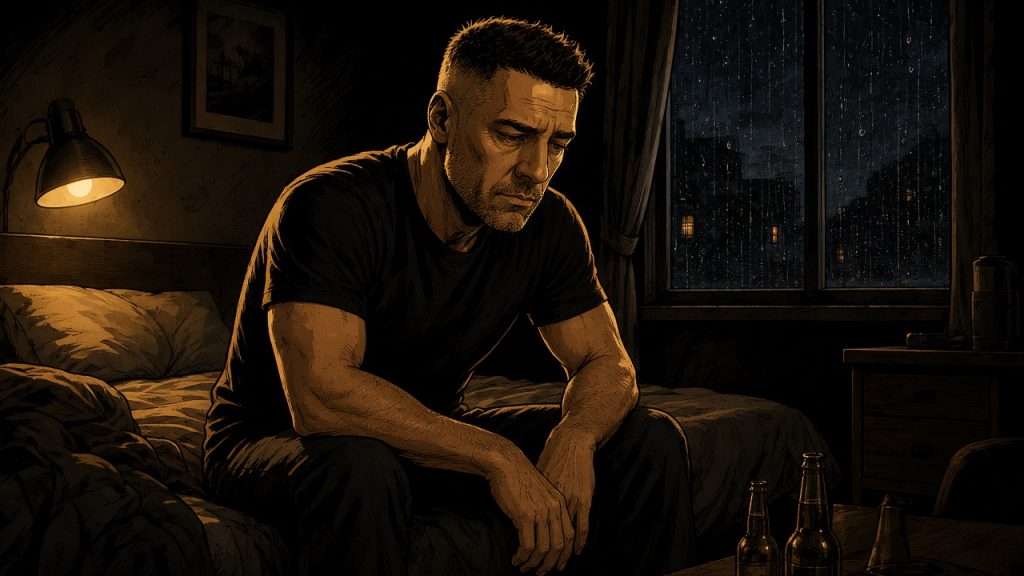
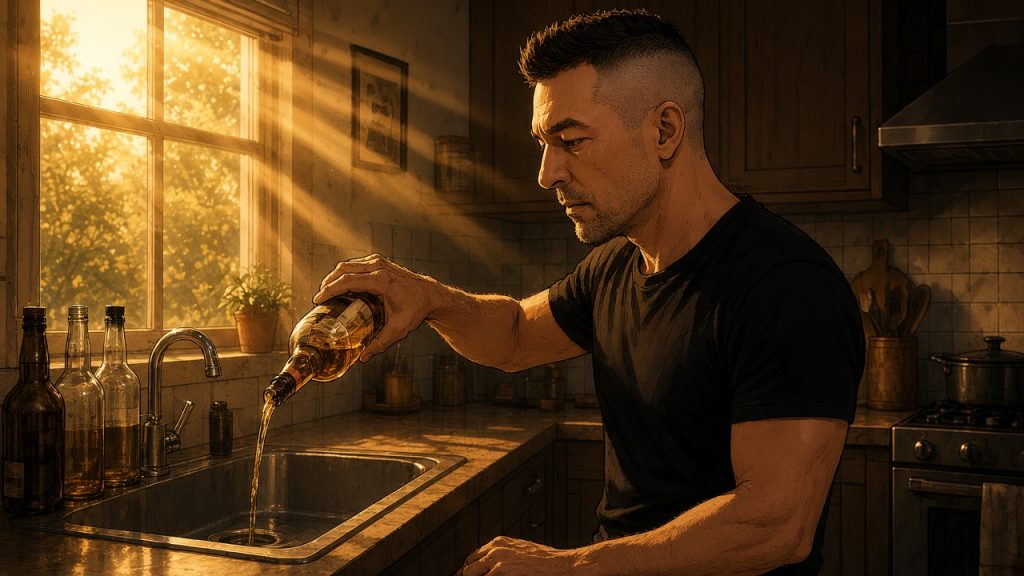
I won’t bore you with the details. The bottom line is that after that, I went into a spiral. Depression. A dark hole of despair. Drinking a lot. Doing stupid stuff. Not moving forward with my life in any real way. For about a year, I was just in a bad spot, and the months blurred into a kind of slow chaos.
If you’re reading this in the middle of your own version of that, you know exactly what I’m describing. Heartbreak isn’t fun. And when you know you played a part in it, there’s an extra layer: regret on top of loss.
About a year later, something shifted. [ADD: what actually triggered the decision – a moment, a realisation, a low point – if you want to share it.] I decided I was done feeling sorry for myself, and I made a choice: I was going to take all that pain and all that energy and channel it into something.
That something was my online business. I’d already been working on it part-time for about five years, on the side, without ever really going all in. Now I did. All the energy that had been going into the spiral went into the work. [ADD: optional – one line on what the business is or does.]
It didn’t happen overnight. It took about two and a half more years before it really took off. But when it did, it changed my life. It let me travel and live around the world: Thailand, Vietnam, Malaysia, Dubai, Mexico. Today I live in South Korea.
None of that would have happened the way it did without that breakup and that lost year. I wouldn’t wish the pain on anyone. But I can honestly say it was the seed of the biggest change in my life.
Why Heartbreak Cuts So Deep
If heartbreak feels physical, that’s because in many ways it is. Losing someone you were deeply attached to hits the same systems in your brain and body that deal with pain, stress and loss. You can’t sleep, you can’t eat, or you can’t stop eating. Your chest feels tight. Your mind replays the same scenes on a loop. That isn’t weakness. It’s what being human looks like.
A few things make it cut especially deep:
- You lose more than one person. You lose your routines, your future plans, sometimes friends and places you shared. A whole version of your life disappears at once.
- Your identity takes a hit. For a while, part of who you were was “her partner.” When that goes, you’re left asking who you are without it.
- Regret makes it heavier. If you ended it, or did things you’re not proud of, you carry guilt on top of grief. That was my situation, and it’s a particularly hard one to sit with, because you can’t blame anyone else.
- Men often have nowhere to put it. Many of us don’t talk about this stuff. We don’t cry in front of friends. So the pain goes somewhere else: into the bottle, into anger, into isolation, into numbing ourselves.
Understanding why it hurts doesn’t make it stop hurting. But it does help you stop adding a second layer of pain on top: the shame of feeling it at all. You’re allowed to hurt. What matters is what you do next.
Two Paths: Destroy or Build
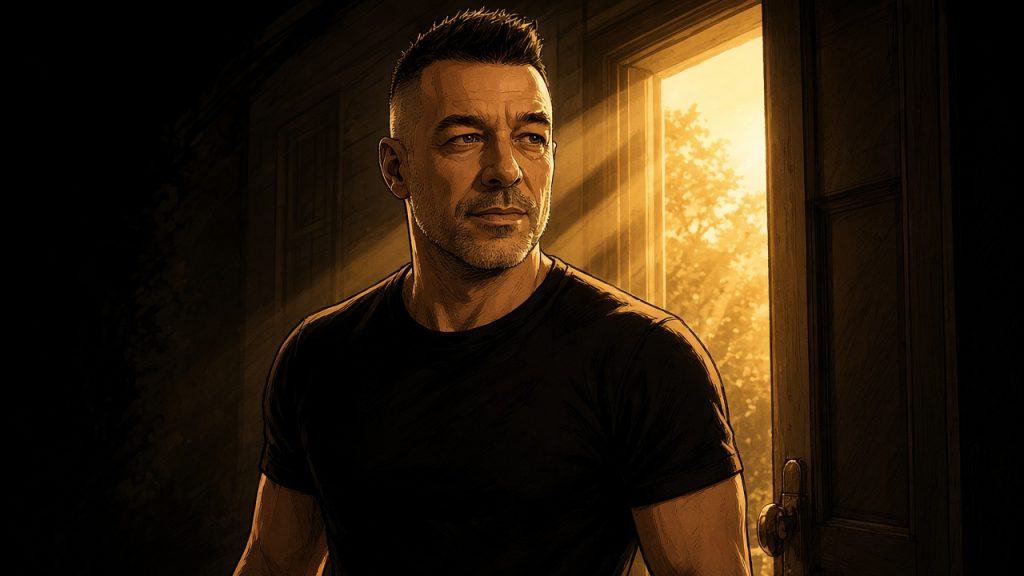
After heartbreak, every man is standing at a fork, whether he sees it or not.
The destroy path is the one I was on for that year. It looks like drinking to numb it, chasing distractions, staying up all night, making careless decisions, letting your health go, letting your work slide, replaying the past on repeat. It feels like coping. It’s actually just delaying. And the scary thing is that it can go on for years. For some men, one breakup turns into a decade of drift.
The build path starts with the same pain. The difference is direction. Instead of using the energy to numb yourself, you use it to construct something: a business, a body, a skill, a career, a new life. The pain doesn’t go away faster on this path. But at the end of it, you have something to show for it.
Here’s the important part: the pain itself is energy. Heartbreak floods you with emotion, restlessness and a desperate need for things to be different. That’s fuel. It can burn you down or it can drive you forward. The fuel is the same; you choose the engine.
That’s the core of what I mean by SOVEREIGN. A sovereign man doesn’t pretend he isn’t hurt. He owns his frame, which means he owns what he does with the hurt.
The Decision: Stop Feeling Sorry for Yourself
Nobody can make this decision for you. Not your friends, not a therapist, not a YouTube video. At some point, you have to decide.
For me, it came down to this: I had to stop the self-pity talk. The stories I kept telling myself (I ruined it, I’ll never find anything like that again, what’s the point) were keeping me stuck. They felt true, and they felt like grief. But after a while they weren’t grief anymore. They were an excuse to keep not moving.
Self-pity is seductive because it asks nothing of you. You just have to keep feeling bad. Deciding to build asks a lot of you: effort, discipline, getting up when you don’t want to. But that’s exactly why it works.
The decision doesn’t need to be dramatic. It can be as simple as saying to yourself: This happened. It hurts. I’m not going to let it take years from me. Starting today, I’m going to use it.
And then doing one thing, that day, that proves you meant it.
If you want a deeper look at changing the story you tell yourself, I wrote about self-image and rewiring your inner script in my Psycho-Cybernetics 30-day plan .
How to Turn the Pain into Fuel: Practical Steps
Here’s what I’d tell any man in the middle of it now, based on what worked for me and what I wish I’d done sooner.
1. Put a limit on the spiral
You’re going to feel terrible for a while. Let yourself grieve, but give it boundaries. Feel it, talk about it, write about it. But don’t let the dark period become a lifestyle. Set yourself a rough line: I’ll let myself fall apart for a few weeks, and then I start rebuilding, whether I feel ready or not. You won’t feel ready. Start anyway.
2. Cut the drinking
I’ll be straight about this because it was my biggest mistake. Alcohol feels like relief, but it deepens depression, wrecks your sleep, kills your motivation and leads to the “stupid stuff” you regret later. If you do nothing else on this list, cut it back hard, or cut it out completely for a while. Your head will clear faster than you expect.
3. Pour your energy into one project
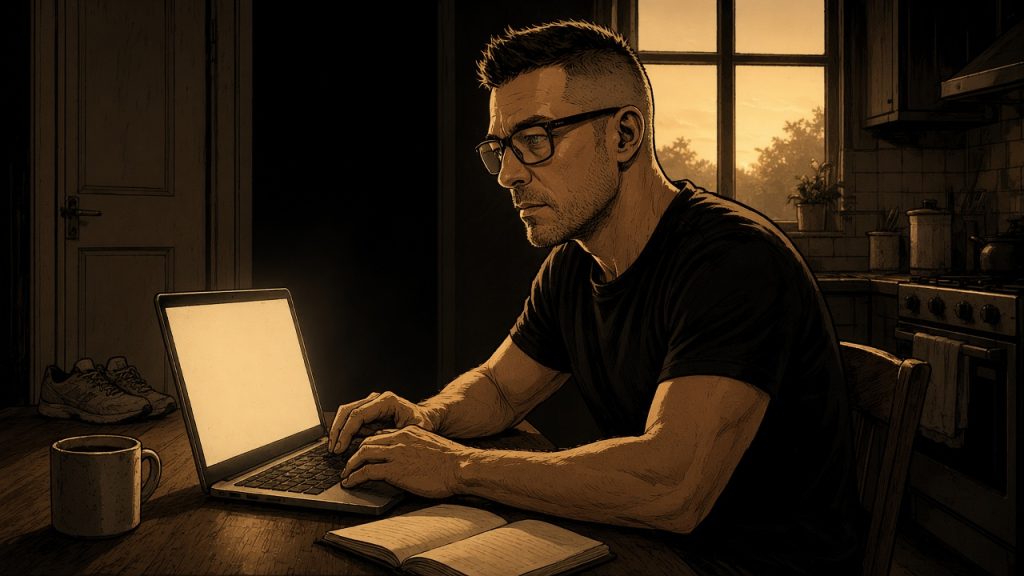
This is the step that changed my life. Pick one thing (a business, a career move, a skill, a physical goal) and give it everything the heartbreak is giving you. One thing, not ten. For me it was the online business I’d been half-building for years. The pain gave me the focus I’d never had when life was comfortable.
Ask yourself: What have I been putting off, or doing half-heartedly, that could change my life if I went all in? That’s your project.
4. Look after your body and build a routine
Heartbreak destroys structure. Rebuild it on purpose. Get up at the same time. Train: lift, run, walk, anything. Eat real food. Sleep. A routine gives your days shape when your emotions don’t. And training is one of the best ways to burn off the restless, angry energy that otherwise goes into bad decisions.
5. Give it time, and get perspective
Time really does help, but only if you’re using it well. A year spent drinking is a year lost. A year spent building is a year that changes everything. Remind yourself that this is a chapter, not the whole book. Most men who’ve been through a deep heartbreak will tell you, years later, that it ended up mattering less than they feared and teaching them more than they expected.
Perspective also comes from honesty. If you played a part in what went wrong, as I did, own it. Learn from it. Then let it go. Guilt you don’t learn from is just more self-pity.
6. Talk to someone
You don’t need to tell everyone. But tell someone: a friend you trust, a brother, a counsellor. And if the dark hole gets so deep that you’re thinking about harming yourself, reach out to a professional or a crisis line right away. There’s no weakness in that. It’s the strongest thing you can do.
What Not to Do
A few traps catch almost every man after a breakup. I fell into some of them myself.
- Don’t drown it. Drinking, drugs, endless partying: they postpone the pain and add new problems on top.
- Don’t keep checking her social media. Every look reopens the wound. Mute, unfollow, or block if you have to. It’s not petty; it’s self-respect.
- Don’t beg or keep chasing. I tried to go back, and it was too late. Sometimes it is. Once a door is clearly closed, keep your dignity and walk on.
- Don’t turn bitter toward women. One painful relationship, even a few, isn’t the truth about all women. Bitterness poisons your future relationships before they even begin, and it keeps you tied to the past.
- Don’t rebound to fill the hole. Jumping straight into something new to avoid feeling the loss usually just moves the pain into someone else’s life.
- Don’t wallow for years. The grief is real. But there’s a point where grief becomes a habit. Notice when you’ve crossed it.
- Don’t isolate completely. Some solitude is healing. Total isolation lets the dark thoughts run the show.
And one more: don’t assume your life is ruined just because you’re alone right now. Being single can be a genuinely good place to build from. I wrote about that in why single men are happier than most people think .

It Gets Better, If You Decide It Will
If you’re stuck right now, I want you to hear this clearly: it will get better. You will move through this.
But you have to make the decision. If you just keep feeling sorry for yourself, the pain will keep running your life. If you decide to use it, it can become the seed of something you’d never have built otherwise.
I could have kept going down that destructive path for years. A lot of men do. Instead, about a year in, I made a choice, and that choice is the reason I’m writing this from South Korea, with a life I couldn’t have imagined back in 2015.
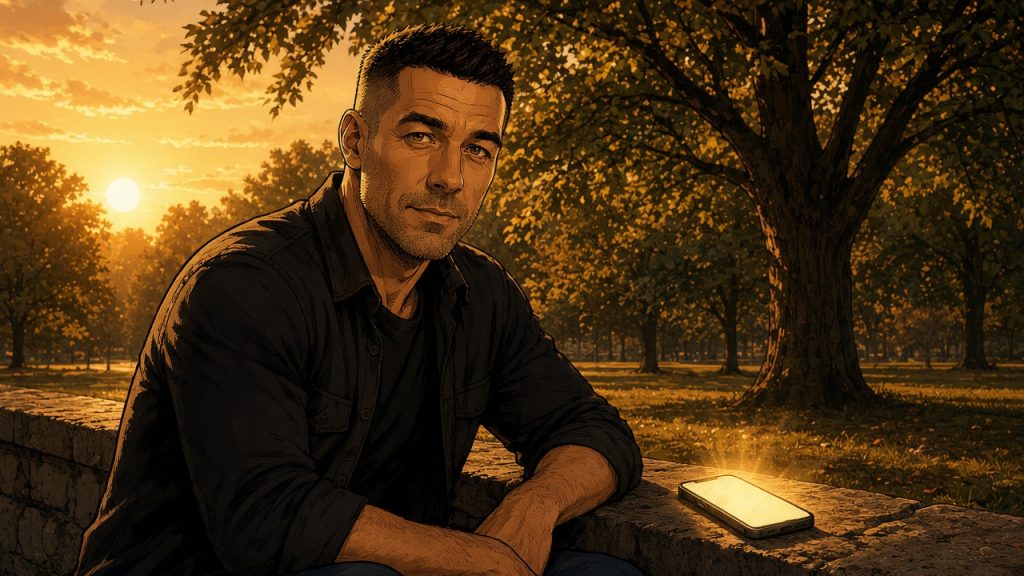
The point isn’t to pretend it doesn’t hurt. The point is that you get through it without destroying yourself, and you come out the other side with something real. That’s what makes you, instead of breaking you.
If this helped, I talk about heartbreak, dating, mindset and building yourself up as a man on my YouTube channel, HRH (@HRHProject). Subscribe and come along. And if you’re in the middle of it right now, hang in there. Start building today.
Affiliate disclosure: Some links in this article are affiliate links. If you buy through them, I may earn a small commission at no extra cost to you. I only recommend things I'd use myself.