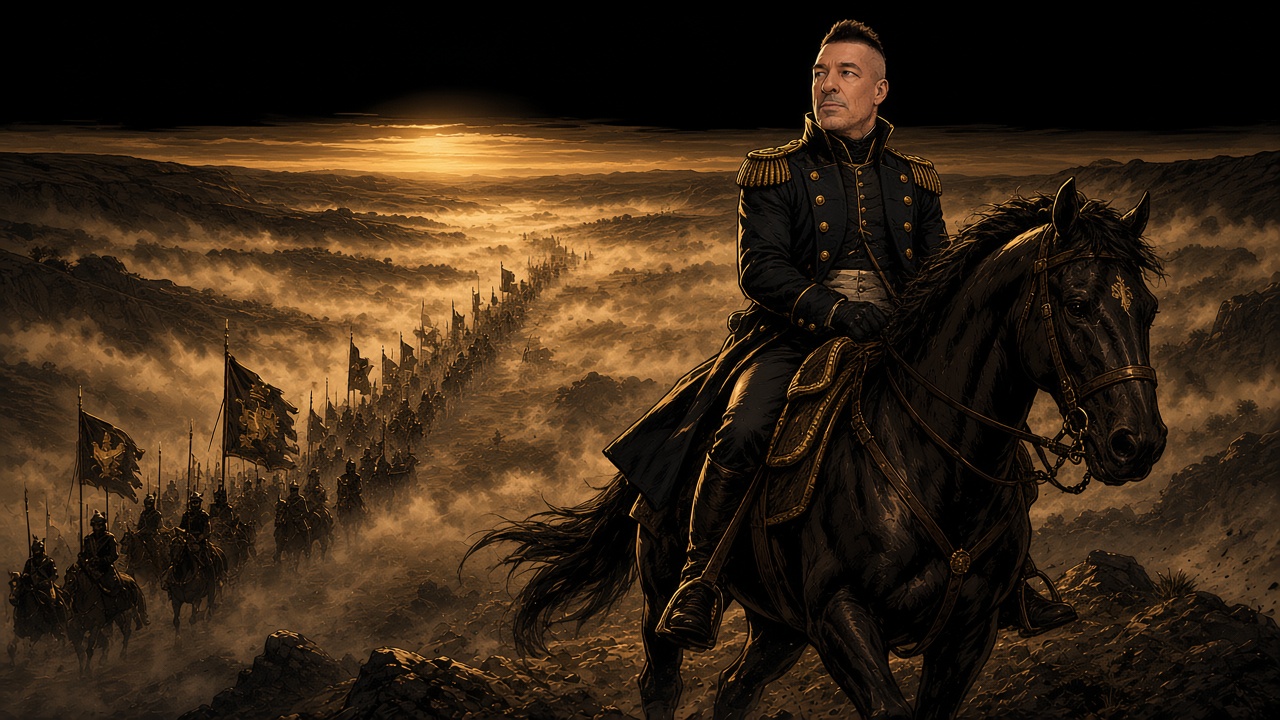
A poor boy from an island most Frenchmen looked down on arrives at a military school where he doesn’t speak the language well, has little money, and is mocked for his accent. Within three decades he dominates most of Europe, has rewritten France’s laws, and has a name that’s still shorthand for ambition two centuries later.
Less than fifteen years after that, he’s dying on a rock in the South Atlantic, a prisoner, having lost almost everything he built.
Both halves of that story are worth studying. Napoleon Bonaparte is one of history’s clearest examples of what discipline, self-education, focus and speed can do for a man who starts with nothing. He’s also one of its clearest warnings about what ego, overreach and a court of yes-men can do to the same man.
This post isn’t hero worship. It’s about taking what was genuinely great in his mindset, understanding exactly where it went wrong, and using both to build something better in your own life.
Who Napoleon Was
Napoleone di Buonaparte was born on 15 August 1769 in Ajaccio, Corsica, a year after the island passed from Genoa to France. His family were minor Corsican nobility with little money. At nine he was sent to the military school at Brienne in mainland France, and later to the École Militaire in Paris. In 1785, at sixteen, he was commissioned as an artillery officer.
The French Revolution gave a talented outsider room to rise. At the siege of Toulon in 1793, the young artillery captain saw that controlling the heights above the harbour would make the British fleet’s position impossible. His plan worked, and at twenty-four he was promoted to brigadier general.
In 1796, newly married to Joséphine de Beauharnais, he took command of the ragged, unpaid French Army of Italy and won a string of victories that made him famous. After a campaign in Egypt (1798–1799), he returned to France and took part in the coup of November 1799 that made him First Consul, effectively the ruler of France. In 1804 he crowned himself Emperor.
His rule brought lasting reforms: the Napoleonic Code (the French Civil Code of 1804), a centralised administration, the Bank of France, the lycée school system and the Legion of Honour. It also brought more than a decade of war. His greatest victory came at Austerlitz in December 1805; he then crushed Prussia in 1806 and dominated the continent.
The turn came with a draining war in Spain from 1808 and, above all, the invasion of Russia in 1812. He led more than half a million men east; only a fraction came back. In 1813 a coalition defeated him at Leipzig, the “Battle of the Nations,” and in 1814 he abdicated and was exiled to the island of Elba.
In March 1815 he escaped, landed in France and retook power without a fight in what became known as the Hundred Days. It ended on 18 June 1815 at Waterloo, against Wellington’s and Blücher’s armies. He surrendered to the British and was exiled to Saint Helena, a remote island in the South Atlantic, where he died on 5 May 1821, aged fifty-one.
The myth that he was short
Napoleon wasn’t short. His height was recorded as 5 pieds 2 pouces in old French units, which is roughly 1.68–1.69 metres, or about 5 feet 6 or 7 inches. That was average or slightly above for a Frenchman of his time. The myth grew from the confusion between French and English inches, from British cartoonists such as James Gillray who drew him as a tiny, raging figure, from his affectionate nickname le petit caporal (“the little corporal”), and from the tall soldiers of his Imperial Guard who often stood around him. The term “Napoleon complex” is built on a man who didn’t have the thing it describes.
That’s a small lesson in itself: much of what “everyone knows” about a famous man is caricature. Look at the record.
Why Study Him, and the Honest Caveat
Napoleon is worth studying because his strengths are rare and learnable. He read relentlessly. He worked with extraordinary focus. He made decisions quickly and acted on them faster than his opponents could react. He prepared obsessively and then seized moments others missed. He built systems, laws and institutions that outlasted him by centuries. And he did it as an outsider, starting from almost nothing.
The caveat is serious, and it shouldn’t be skipped. His wars killed millions of people across Europe. He was vain and increasingly authoritarian; he censored the press and crowned himself. In 1802 he reinstated slavery in France’s colonies, reversing the 1794 abolition, and sent an army to Saint-Domingue, where the war that followed ended in Haitian independence. The Civil Code that spread equality before the law also made wives legally subordinate to their husbands. And his ego, in the end, destroyed most of what his discipline had built.
So the honest frame is this: learn from his strengths, and learn even more from his downfall. The same traits that lifted him (self-belief, ambition, speed, the refusal to accept limits) became the traits that ruined him once nobody around him could say no. That arc is the most useful thing about him.

How to Read This: Self-Rule First
Napoleon conquered a continent. He never fully conquered himself. His discipline was immense in work and war, but his ego, his temper and his appetite for more were never really governed. That gap is where his empire broke.
So read his life in that order: self-rule first, then leadership, then ambition. Take his habits of mind (reading, focus, preparation, decisiveness) and apply them to your own life before you think about leading anyone. Take his leadership lessons (morale, merit, leading from the front) next. And take his ambition last, with the warning attached: ambition without self-command ends on a rock in the ocean.
This is what I mean by SOVEREIGN at HRH. A sovereign man owns his frame. He builds, he leads, he takes risks, but he rules himself first, and he knows when to stop.
Who This Article Is For
This is for you if:
- You’re starting from nothing, or from behind, and want to know how an outsider builds something serious.
- You’re building a business or career and want to work with more focus, speed and preparation.
- You lead people, or want to, and want them to follow you willingly.
- You have big ambitions and want to make sure they don’t turn on you.
- You’ve read my articles on Greene and Machiavelli and want a real historical figure to test those ideas against.
I’ve built an online business from scratch and lived in six countries, often as the outsider with the accent. Some of what follows I’ve tested on myself; the rest I’m still working on.
How to Use This Article
Read the bio and the caveat first. The lessons only make sense against the whole arc of his life.
Then take the ten lessons one at a time. Each has the lesson in plain language, how it applies at work, in business, in dating and relationships, and in daily life, the ethical line, and two exercises.
Spend the most time on the downfall. Lesson 10 and the warning checklist at the end are the parts most men skip and most need.
Read the companions. This fits with three earlier posts: Greene’s The 33 Strategies of War (Napoleon is one of its main sources), The 48 Laws of Power , and Machiavelli’s The Prince . Those are the theory. Napoleon is the case study.
A note on quotes
Napoleon is one of the most misquoted men in history. In this post I paraphrase rather than quote unless a line is well attested. A few popular examples to treat with care:
- “Never interrupt your enemy when he is making a mistake.” Widely attributed to him, but no reliable source has been found. Treat it as a later invention.
- “Impossible is not French.” This seems to come from a letter he wrote in 1813, roughly saying that “it isn’t possible” is not French. The popular version is a tidier rewording.
- “An army marches on its stomach.” Commonly attributed to him, sometimes to Frederick the Great; the source is uncertain, though the idea fits his concern with supply.
- “Every soldier carries a marshal’s baton in his knapsack.” Attributed to him in various forms. The idea, that any soldier could rise by merit, matches his system, but the wording is uncertain.
Contents
- Lesson 1: The Outsider Who Used It as Fuel
- Lesson 2: Relentless Self-Education
- Lesson 3: Work Ethic and Focus – the Mental Drawers
- Lesson 4: Speed and Decisiveness
- Lesson 5: Preparation and Seizing the Moment
- Lesson 6: Concentrate Your Force on the Decisive Point
- Lesson 7: Lead from the Front – Morale, Recognition and Merit
- Lesson 8: Build Systems That Outlast You
- Lesson 9: Self-Belief and His “Star” – Confidence vs Delusion
- Lesson 10: The Downfall – Overreach, Yes-Men and Knowing When to Stop
- What Not to Copy in Love and Relationships
- How to Use This: A 30-Day Practice and Checklists

Lesson 1: The Outsider Who Used It as Fuel
The lesson in plain language. At Brienne, Napoleon was the poor Corsican boy with the strange accent and the foreign-sounding name. He had few friends and spent much of his time alone, reading. He didn’t fit in, and for a while he resented the French for it; as a young man he was a Corsican patriot.
What he did with that position is the lesson. Instead of trying to win acceptance on others’ terms, he made himself excellent at something that mattered: mathematics, artillery, history. The Revolution then created a world where talent counted more than birth, and the outsider who’d been preparing alone was ready when the old order collapsed.
Being an outsider gives you two things insiders lack: hunger and a fresh view. You don’t assume the rules are sacred, because they were never made for you.
At work. If you’re the newcomer, the one without the right school or network, stop trying to be accepted and start being undeniable. Build a skill so good that people need you. Use your outsider’s eye: notice what insiders have stopped questioning.
In business. Many of the best businesses are started by people outside an industry who don’t know “how it’s done.” Your lack of credentials can be an advantage if you replace it with competence.
In dating and relationships. If you’ve felt like an outsider (shy, awkward, not the type women seem to notice), use it as fuel for self-improvement, not resentment. Build your health, your skills, your life. Resentment repels people; quiet growth attracts them.
In daily life. Use being the outsider anywhere, as a newcomer in a city, a gym or a field, as a reason to observe closely and learn fast. Every time I moved to a new country, the discomfort of not belonging was also the fastest teacher I’ve had.
The ethical line. Using exclusion as fuel is healthy. Letting it harden into a lifelong grudge against the world, or a need to dominate the people who once looked down on you, is where it turns. Napoleon never fully let go of the need to prove himself, and it drove him to keep conquering long after it made sense.
Exercises.
- Write down where you’re an outsider right now (in your field, your family, your city). Next to each, write one advantage that position gives you.
- Pick one skill that would make you undeniable in your field. Commit thirty minutes a day to it for the next month.
Lesson 2: Relentless Self-Education
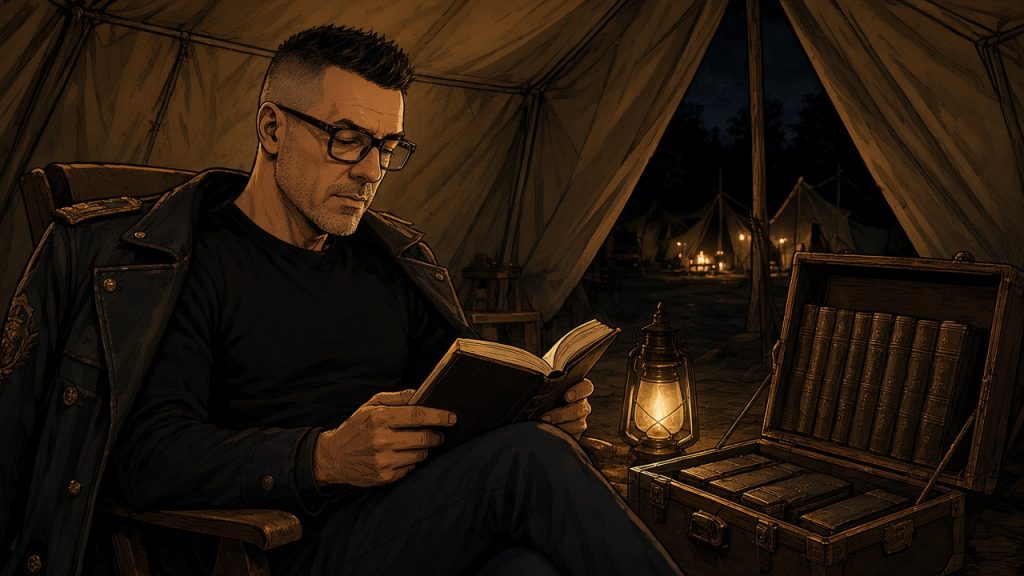
The lesson in plain language. Napoleon was a voracious reader from boyhood. At school and as a young officer he read history, Plutarch’s lives of great men, military theory, geography, philosophy and law. He kept reading on campaign: he had portable libraries of small-format books made so he could carry them with him in the field.
His curiosity went beyond war. When he invaded Egypt in 1798 he brought scholars and scientists with him; their work produced the vast Description de l’Égypte, and it was French soldiers on that expedition who found the Rosetta Stone. He studied before he acted, and he kept studying while he acted.
The lesson is that self-education isn’t something you finish. It’s a habit you carry everywhere, especially when you’re busiest.
At work. Read in your field and around it. Study the history of your industry, the careers of people who did what you want to do, and the mistakes that ended careers like yours.
In business. Before entering a market, study it properly: its history, its key players, why previous attempts failed. Keep a “travelling library”: audiobooks, a reader, a notebook. Use dead time.
In dating and relationships. Read about psychology, attraction and relationships from serious sources, not just online gurus. Learn about the woman in front of you with real curiosity. And read widely for its own sake: a man with a well-stocked mind is better company.
In daily life. Replace one hour of scrolling a week with one hour of reading something hard. Keep a book within reach always.
The ethical line. Self-education has no downside except one: knowledge without humility. Napoleon’s reading made him brilliant; it didn’t stop him from believing in later years that he knew better than everyone around him. Read to stay teachable.
Exercises.
- Build your own travelling library: choose five books on your field, your weak spots and great lives. Carry at least one everywhere for a month.
- Pick a person who did what you want to do. Read a serious biography of them and write one page on what they did that you’re not doing.
Lesson 3: Work Ethic and Focus – the Mental Drawers
The lesson in plain language. Napoleon’s capacity for work astonished the people around him. Accounts describe him working long hours, dictating to several secretaries, sleeping in short bursts, and moving between a war, a budget and a legal question in the same day.
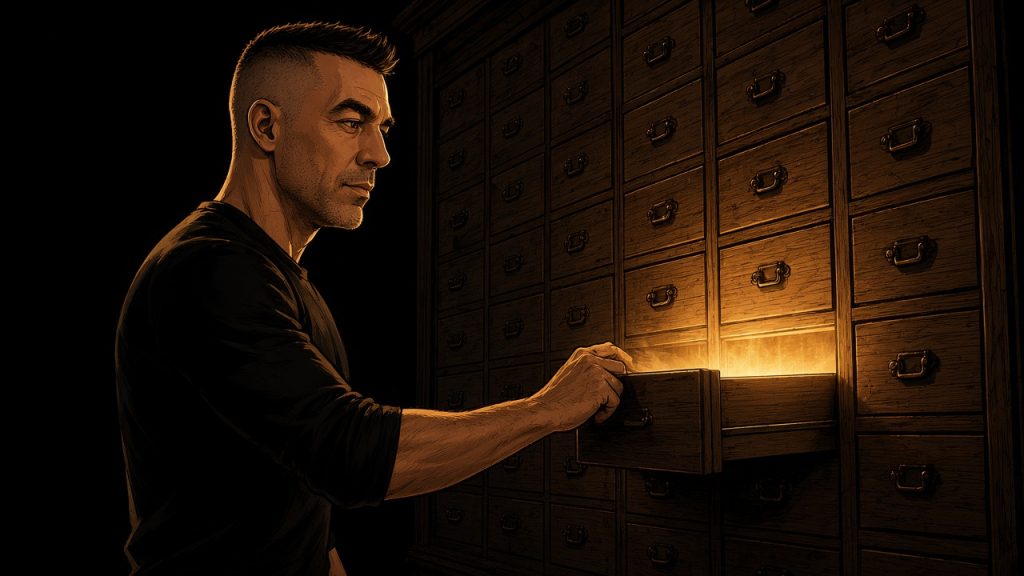
The way he managed it is the useful part. He’s reported to have described his mind as a cabinet of drawers: when he wanted to deal with one subject, he opened that drawer and gave it his full attention; when he was done, he closed it and opened another. And when he wanted to sleep, he closed them all.
That’s a description of deep, compartmentalised focus: total attention on one thing at a time, and the discipline to put things away so they don’t bleed into everything else.
At work. Work in blocks. One task, one drawer, full attention, phone away. When the block ends, close it consciously, write down where you stopped, and move on. Most people do the opposite: everything open at once, nothing done well.
In business. Founders drown in context switching. Batch similar work (calls, writing, admin, strategy) into separate blocks. Give the most important drawer your best hours.
In dating and relationships. This is one of the most useful lessons for love. When you’re with her, close the work drawer. Phone down, attention on her. Many relationships suffer not from lack of love but from a man who’s physically present and mentally at the office.
In daily life. Use the drawer image at night. Before bed, write down what’s open, then deliberately close each drawer. It’s a simple way to stop the mind racing.
The ethical line. Hard work and focus are healthy. The trap is making work your whole identity and neglecting health, family and sleep. Napoleon’s pace was extraordinary, but by his forties his health was declining, and the people closest to him paid for his absence. Work hard, then close the drawer.
Exercises.
- For one week, divide your working day into three or four focused blocks, each on a single “drawer.” Track how much you get done compared with a normal week.
- Each night this week, list the open drawers in your head, write one next step for each, and close them before sleep.
Lesson 4: Speed and Decisiveness
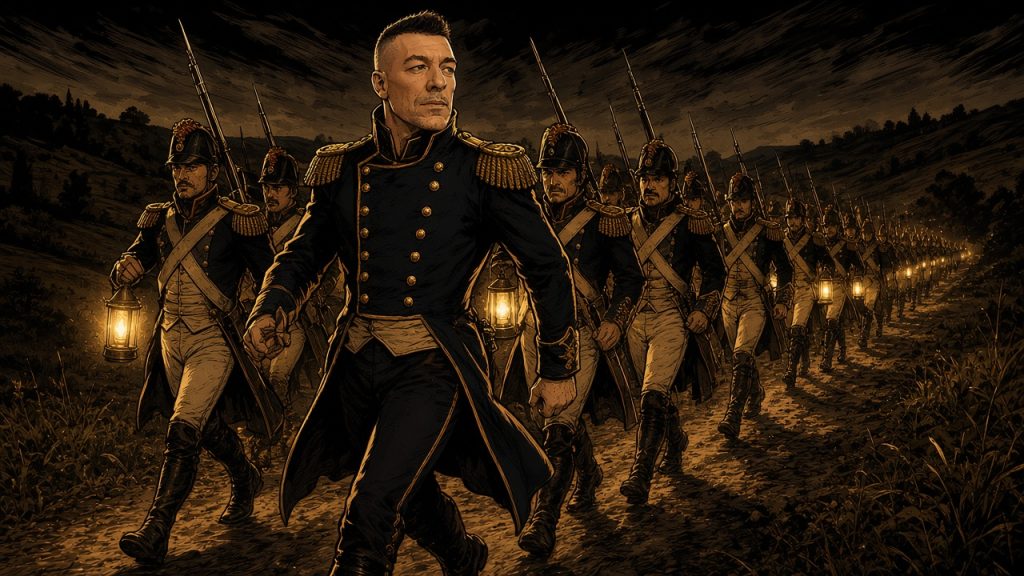
The lesson in plain language. Napoleon’s armies moved faster than anyone expected. His system of independent corps, each able to march and fight on its own, let him cover ground quickly and combine forces at the right moment. In 1805 he marched his army from the English Channel coast to the Danube and surrounded an Austrian army at Ulm, which surrendered before its Russian allies could arrive.
Speed came from decisiveness. He made decisions quickly once he had enough information, and he expected them to be carried out immediately. Opponents who deliberated, waited for councils, or followed slow procedures were constantly overtaken.
The lesson: in most competitive situations, a good decision made now beats a perfect decision made too late. Speed is a strategy.
At work. Respond quickly, decide quickly on small things, and save deliberation for the few decisions that really matter. Be the person who moves while others are still scheduling the meeting about the meeting.
In business. Speed is often the small player’s only advantage. Launch, test, learn, adjust, faster than larger competitors can.
In dating and relationships. Decisiveness is attractive. Make the plan, choose the restaurant, ask her out rather than texting for a week. But speed has limits here: rushing intimacy or commitment, or pushing someone faster than they want to go, isn’t decisiveness, it’s pressure.
In daily life. Use a simple rule: if a decision is reversible and small, make it in under a minute. Keep your thinking time for what’s irreversible.
The ethical line. Speed and decisiveness are healthy. Haste is not. Napoleon’s speed served him for years, but his later decisions (invading Russia, returning in 1815) show what happens when speed outruns judgment. Move fast on what’s reversible; slow down on what isn’t.
Exercises.
- List five decisions you’ve been postponing. Make the three smallest ones today.
- For one week, answer every simple request within the same day. Notice how people’s view of you changes.
Lesson 5: Preparation and Seizing the Moment
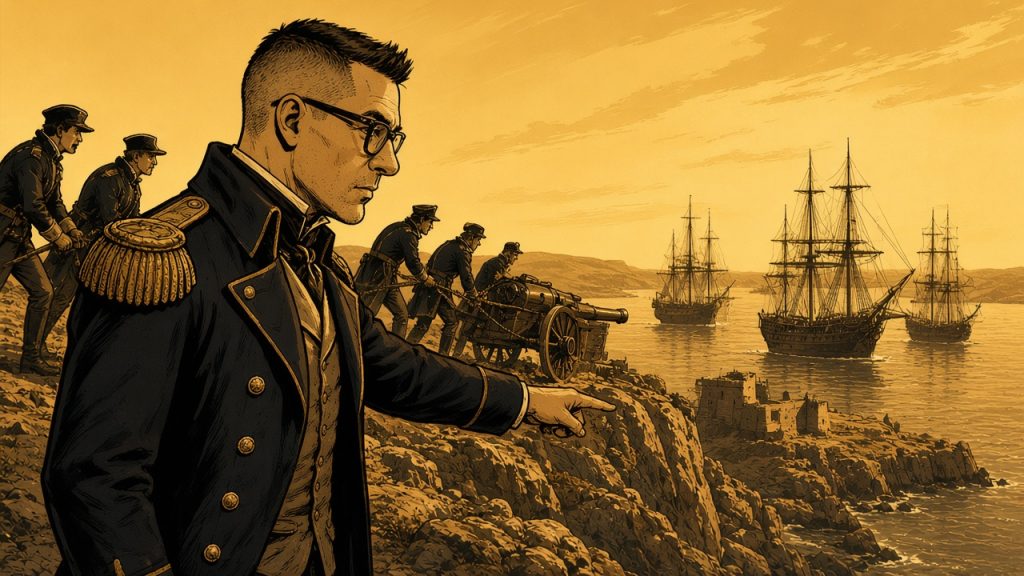
The lesson in plain language. Napoleon’s breakthrough at Toulon in 1793 wasn’t luck. He’d spent years studying artillery and terrain. When he arrived, he saw what others had missed: the key wasn’t the city but the heights commanding the harbour. Take those, and the British fleet would be forced to leave. He pushed for that plan, organised the guns, and it worked.
His later campaigns show the same pattern: detailed study of maps, roads and supplies, followed by fast action when the moment came. In 1800 he led an army over the Great St Bernard Pass in the Alps to surprise the Austrians in Italy. (Jacques-Louis David’s famous painting shows him on a rearing horse; in fact he crossed on a sure-footed mule.) At Marengo, in June 1800, he nearly lost; the timely arrival of General Desaix’s reinforcements, and Desaix’s death in the counterattack, turned the day. Napoleon then had the official account polished to look more planned than it was.
That honest version is more useful than the legend: prepare relentlessly, act when the moment comes, and accept that luck and other people will still play a part.
At work. Prepare more than anyone else for the meetings that matter. Know the numbers, the people and the history. Then, when an opening appears (a crisis, a vacancy, a question nobody can answer), step in.
In business. Study your market so well that you see openings before competitors. Keep resources (cash, time, a product ready to launch) so you can move when the moment arrives.
In dating and relationships. Preparation here means preparing yourself: your health, your social skills, your life. When you meet someone you like, you’re ready. Seizing the moment means not letting a genuine connection pass because you were too hesitant.
In daily life. Keep your life in a state of readiness: savings, fitness, a sharp skill set. Opportunities favour the man who’s already prepared.
The ethical line. Preparation and seizing opportunity are healthy. Rewriting the story afterwards to make yourself look like a genius, as Napoleon did after Marengo, is not. Give credit to the people and the luck that helped you.
Exercises.
- Pick the most important event in your next month (a pitch, an interview, a hard conversation). Prepare for it twice as thoroughly as you normally would.
- Look for the “heights above the harbour” in your biggest problem: the one position that, if secured, makes the rest fall into place. Write it down.

Lesson 6: Concentrate Your Force on the Decisive Point
The lesson in plain language. Napoleon’s masterpiece was Austerlitz, on 2 December 1805, against a larger Russian and Austrian army. He deliberately made his right flank look weak and gave up the high ground of the Pratzen Heights in the centre, tempting the allies to move troops off the heights to attack his right. As they did, and as the morning fog lifted (the “sun of Austerlitz”), he sent Marshal Soult’s corps straight up into the weakened centre, split the allied army, and won decisively.
The principle behind it runs through his career: don’t spread your strength evenly. Find the decisive point and concentrate overwhelming force there, even if it means accepting weakness elsewhere.
At work. Most people spread their effort across a dozen priorities and make little progress on any. Identify the one result that would most change your position this year, and put the bulk of your time there.
In business. Concentrate on one product, one market or one channel until it works. Small businesses that try to do everything usually do nothing well. Accept that some things will be neglected.
In dating and relationships. If you’re single, concentrate on becoming the man you want to be and on a few genuine connections, rather than spraying attention across dozens of dating-app chats. If you’re in a relationship, put your best energy where it counts: time, attention and presence.
In daily life. Choose one area of life (health, money, skills) to focus on this quarter. Let the others run on maintenance.
The ethical line. Concentrating effort is entirely healthy. The only danger is ignoring the areas you’ve deliberately neglected for too long. Revisit them each season.
Exercises.
- Write down every goal you’re currently pursuing. Circle the one that matters most. For the next 30 days, give it your first and best hour every day.
- Find one area where you’ve been spreading yourself thin. Cut it back to a minimum and redirect that energy to your decisive point.
Lesson 7: Lead from the Front – Morale, Recognition and Merit
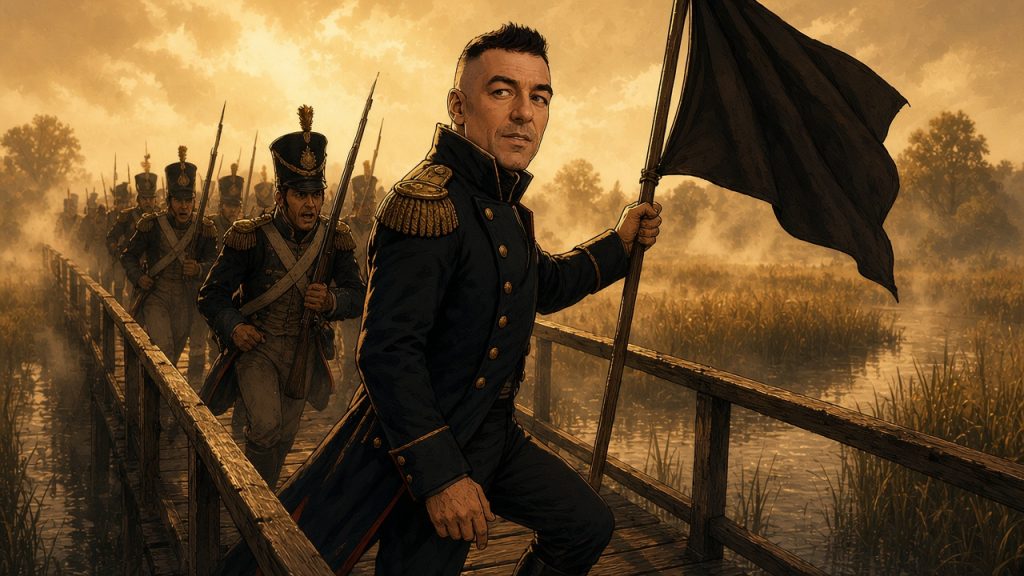
The lesson in plain language. At the Bridge of Arcole in November 1796, with his attacks stalling, Napoleon seized a flag and tried to lead his men across himself. The charge failed; in the confusion he ended up in a marshy ditch and had to be pulled out. The battle was won over the following days by other means. But the image of the general at the front of the bridge became legend and helped bind his soldiers to him.
His leadership went far beyond that moment. Accounts describe him remembering veterans’ names and battles, talking with soldiers in camp, and rewarding courage publicly. In 1802 he created the Legion of Honour, open to soldiers and civilians for merit rather than birth. He promoted men from humble backgrounds to marshal. His soldiers believed that ability, not family, would decide how far they rose.
The most dramatic example came in March 1815. Returning from Elba, he met a regiment sent to stop him, walked toward them alone, and offered himself. They joined him instead.
At work. Be visible when things are hard. Know your people’s names, their work and their strengths. Recognise good work publicly and specifically. Promote on merit, and be seen to do it.
In business. Build a culture where people rise because of results. Do the hard parts yourself sometimes, so your team knows you understand them. Recognition costs little and builds loyalty money can’t buy.
In dating and relationships. Leading from the front in a relationship means going first: first to apologise, first to plan, first to take on the hard conversation, first to show appreciation. Notice and name what she does well. It’s the opposite of hiding behind sulking or waiting for her to fix things.
In daily life. Lead your own life from the front: do the hard thing first each day, before you ask anything of anyone else.
The ethical line. Leading by example, recognising people and rewarding merit are healthy. The dark side is using people’s loyalty to spend their lives for your ambitions. Napoleon’s soldiers loved him and followed him into Russia. Earn loyalty, and then deserve it.
Exercises.
- This week, recognise three people specifically and sincerely for something they did well, at work or at home.
- Identify the hardest task you’ve been delegating or avoiding. Do it yourself this week, visibly and well.

Lesson 8: Build Systems That Outlast You
The lesson in plain language. Napoleon’s military empire lasted about a decade. His civil work lasted centuries. The Civil Code of 1804, drafted by a commission of jurists with Napoleon personally attending many sessions, set out clear, written law for the whole country: equality before the law, the end of feudal privileges, secure property rights. It still shapes French law and influenced legal systems across Europe, Latin America and beyond.
He also built institutions: the prefect system of local administration, the Bank of France, the lycées and a centralised education system, and the Legion of Honour. These were systems designed to run without him.
He’s reported to have said, in exile, that his true glory wasn’t his forty battles but his Civil Code, which would live forever. Whatever the exact words, the record supports the idea.
At work. Document what you do so others can do it. Build processes, checklists and templates. A man who builds systems gets promoted; a man who keeps everything in his head becomes a bottleneck.
In business. The goal is a business that runs without you in every task. Write down your processes, train people, build tools. That’s what turns a job into an asset.
In dating and relationships. Couples who build simple systems (a weekly check-in, shared finances, an agreed way of handling disagreements) tend to argue less about the small things and have more energy for each other.
In daily life. Build personal systems: a morning routine, a weekly review, automatic savings. Systems carry you on the days motivation doesn’t.
The ethical line. Building lasting systems is one of the best things a man can do. But systems carry the values of the person who built them. Napoleon’s Code spread equality before the law but also made wives subordinate to husbands; his colonial policy restored slavery. Build systems you’d be proud to have outlast you.
Exercises.
- Pick one task you do repeatedly. Write a simple step-by-step process for it, clear enough that someone else could follow it.
- Design one personal system this week (a morning routine, a weekly review, an automatic transfer to savings) and run it for 30 days.
Lesson 9: Self-Belief and His “Star” – Confidence vs Delusion
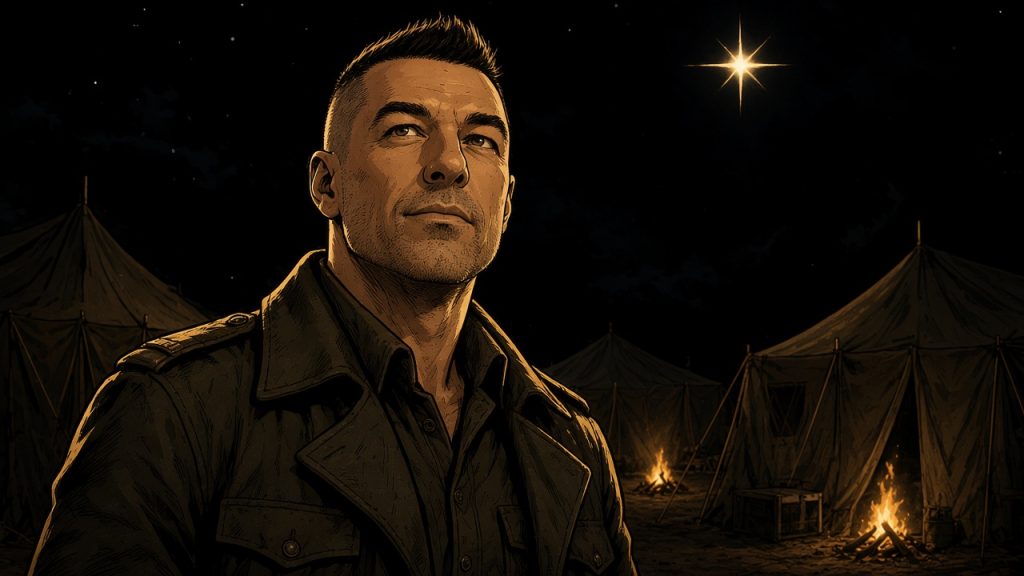
The lesson in plain language. Napoleon spoke of his “star,” a sense that destiny was with him. That belief carried him through enormous risks: crossing the Alps, gambling at Austerlitz, returning from Elba with a handful of men. Without it, the outsider from Corsica would never have tried half of what he did.
But the same belief, unchecked, became delusion. In later years he increasingly trusted his star over evidence. He dismissed warnings, assumed enemies would behave as he wanted, and believed he could always win one more battle to fix things.
The line between confidence and delusion is feedback. Confidence acts boldly and listens to results. Delusion acts boldly and ignores them.
At work. Believe in yourself enough to take on stretch roles and big projects. But check your confidence against results: are you delivering, or just believing?
In business. Founders need irrational optimism to start. They need cold realism to survive. Hold both: believe in the vision, and look honestly at the numbers every week.
In dating and relationships. Self-belief is attractive. Grounded confidence means you approach, express interest and lead without needing constant reassurance. Delusion is believing she feels something she’s clearly told you she doesn’t, or that you’re always right in arguments. Confidence listens; delusion doesn’t.
In daily life. Write down your bold goals, and next to each, the evidence you’ll accept that it’s working or not.
The ethical line. Self-belief is healthy and necessary. Believing you’re destined to win, whatever the evidence and whatever it costs others, is how men like Napoleon end up spending other people’s lives on their certainty.
Exercises.
- Write down your biggest goal. List three reasons to believe you can achieve it, and three signs that would tell you you’re wrong. Review them monthly.
- Ask two people you trust: “Where am I overconfident?” Listen without defending yourself.
Lesson 10: The Downfall – Overreach, Yes-Men and Knowing When to Stop
The lesson in plain language. Napoleon’s downfall had several causes, and all of them are relevant to any man who achieves success.
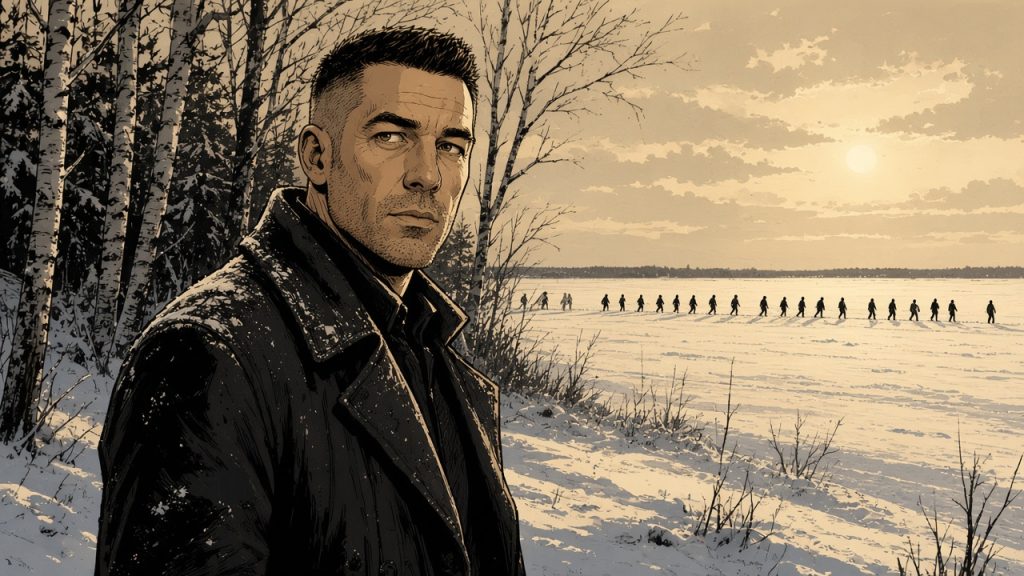
Overreach. By 1807 he dominated Europe. He could have consolidated. Instead he kept expanding: into Spain from 1808, where a long, draining war tied down hundreds of thousands of troops, and then into Russia in 1812. The Russians retreated, avoided a decisive battle and left him an empty, burning Moscow. The retreat through the Russian winter destroyed his army.
Yes-men. As his power grew, the people around him increasingly told him what he wanted to hear. Some did warn him: his former ambassador to Russia, Armand de Caulaincourt, argued against the invasion. Napoleon overruled him. Men who might have checked him were sidelined, and the court around him became one where contradicting the Emperor was costly.
Not knowing when to stop. He was offered peace terms several times between 1813 and 1814 that would have left him on the throne of a smaller France. He refused, believing one more victory would restore everything. In 1815 he came back from Elba and gambled again. Waterloo ended it.
Dignity in defeat. His final years were mixed. On Saint Helena he quarrelled bitterly with the British governor. But he also dictated memoirs and reflections, shaped his own legacy, and after Waterloo he surrendered to the British with a letter to the Prince Regent comparing himself to Themistocles, the exiled Athenian general who sought refuge with his former enemies. There’s dignity in accepting defeat without grovelling.
At work. When things are going well, be most careful. Don’t take on every opportunity because you can. Keep people around you who’ll tell you the truth, and reward them for it. Know when a project, a role or a fight should end.
In business. Many businesses fail not from early struggle but from overexpansion after early success: too many products, too many markets, too much debt. Consolidate before you expand again.
In dating and relationships. Overreach in love looks like trying to control everything, or always wanting more from a partner than she can give. Yes-men look like friends who only ever take your side. And knowing when to stop matters: when a relationship is over, end it with dignity rather than fighting one last battle after another.
In daily life. Notice the moments you want “just one more”: one more drink, one more purchase, one more round of an argument. That impulse is a small version of Russia.
The ethical line. Ambition is healthy. Ambition that can’t hear “no,” can’t consolidate and can’t stop costs everyone around you. The ultimate lesson of Napoleon isn’t how to rise; it’s how not to fall.
Exercises.
- Write down the area of your life where you’re most at risk of overreaching. What would “consolidate before expanding” look like there?
- Name the people who’ll tell you the truth. If you can’t name two, find them. Ask one of them this week what you’re not seeing.

What Not to Copy in Relationships
Napoleon’s love life is a lesson mostly in what not to do.
He fell passionately for Joséphine de Beauharnais and married her in March 1796. During the Italian campaign he wrote her famously intense, adoring and jealous letters, often complaining that she didn’t write back enough. She had an affair while he was away; he learned of it in Egypt and was devastated. He then had affairs of his own. In 1809 he divorced her, largely because she hadn’t given him an heir, and in 1810 he married Marie-Louise of Austria, a political match. According to some accounts, Joséphine’s name was among his last words.
What not to copy:
- Love as conquest. Napoleon approached love the way he approached a campaign: pursuit, possession, victory. A woman isn’t territory, and a relationship isn’t won.
- Possessiveness and jealousy. His letters swing between adoration and demands. Intensity isn’t the same as love, and jealousy isn’t proof of it.
- Being absent and then demanding attention. He was away for years at a time, focused on war, and still expected devotion. If your work always comes first, don’t be surprised when she stops waiting.
- Treating relationships as strategy. His second marriage was a political alliance. Choosing a partner for status, image or advantage rather than real connection rarely ends well.
- Double standards. He was wounded by her affair and then had his own. Hold yourself to the standard you expect.
- Ego over empathy. A man who always needs to be the emperor in the room is exhausting to love.
What you can carry over, carefully:
- Focus (Lesson 3). When you’re with her, close the other drawers.
- Decisiveness (Lesson 4). Make plans, take initiative, be clear about what you want, without rushing her.
- Leading from the front (Lesson 7). Go first: first to apologise, first to appreciate.
- Systems (Lesson 8). Simple shared routines that reduce friction.
- Knowing when to stop (Lesson 10). End what’s over, with dignity.
The SOVEREIGN version: be a man with a mission, but don’t make her one of your conquests. Rule yourself, and let her be free.

How to Use This: A 30-Day Practice and Checklists
A 30-day practice (one lesson every three days)
Spend three days on each lesson. Each morning, read the lesson and choose one exercise. Each evening, answer three questions in a notebook: What did I build today? Where did I act decisively? Where did my ego get in the way?
| Days | Focus | Daily question |
|---|---|---|
| 1–3 | The outsider | How did I turn a disadvantage into fuel today? |
| 4–6 | Self-education | What did I learn today, and from whom? |
| 7–9 | Focus and the drawers | Did I give one thing my full attention today? |
| 10–12 | Speed and decisiveness | What did I decide quickly, and what am I still postponing? |
| 13–15 | Preparation and the moment | What did I prepare for, and what opening did I spot? |
| 16–18 | The decisive point | Did my best hour go to my most important goal? |
| 19–21 | Leading from the front | Who did I recognise, and what hard thing did I do first? |
| 22–24 | Systems | What did I systematise so it runs without me? |
| 25–27 | Self-belief vs delusion | Where did I check my confidence against evidence? |
| 28–30 | Overreach and stopping | Where did I want “one more,” and did I stop? |
If 30 days is too much, take one lesson a week for ten weeks.
Self-audit: how Napoleonic is my discipline?
Tick any that are true for you right now.
- ☐ I read seriously every week, not just headlines and social media.
- ☐ I work in focused blocks, one thing at a time.
- ☐ I close the “work drawer” when I’m with the people I love.
- ☐ I make small decisions quickly and don’t let them pile up.
- ☐ I prepare more thoroughly than most people for the moments that matter.
- ☐ I know my decisive point this year, and most of my effort goes there.
- ☐ I recognise the people around me specifically and often.
- ☐ I go first on the hard things, at work and at home.
- ☐ I’ve built at least one system that runs without me.
- ☐ I check my confidence against results.
Any you couldn’t tick are your next 30 days.
Napoleon’s mistakes: a warning checklist
Tick any that sound like you lately. These are the patterns that brought him down.
- ☐ Expanding before consolidating. Taking on new projects, markets or commitments before the current ones are stable.
- ☐ Fighting on two fronts. Draining a long, unresolved battle (his Spain) while starting a new one (his Russia).
- ☐ Surrounded by yes-men. Nobody around you has disagreed with you in a month.
- ☐ Overruling the warning. Someone with real knowledge told you it was a bad idea, and you went ahead anyway.
- ☐ Trusting your “star” over evidence. You’re relying on luck or destiny instead of looking at results.
- ☐ Refusing a good deal. Turning down a reasonable settlement because you want total victory.
- ☐ “One more battle” thinking. Believing one more push will fix everything that’s going wrong.
- ☐ Rewriting the story. Polishing your account of events so you look better than you were.
- ☐ Treating people as resources. Spending other people’s time, money or wellbeing on your ambitions.
- ☐ Absent at home. Your work has taken over, and the people you love are paying for it.
If you tick three or more, stop and consolidate before you take another step.
Conclusion
Napoleon started with almost nothing: an outsider on a scholarship, mocked for his accent, with no fortune and no connections. Through reading, focus, preparation, speed and a willingness to lead from the front, he rose further than almost anyone in modern history. And through his systems, especially the Civil Code, some of what he built outlasted him by two centuries.
He also showed exactly how that kind of rise ends when a man rules others better than he rules himself. He overreached, surrounded himself with people who wouldn’t stop him, refused to quit while he was ahead, and spent the lives of hundreds of thousands of men on his certainty. He died a prisoner on an island in the middle of the ocean.
So take both halves. Read like him. Focus like him. Prepare, decide and move like him. Build systems that outlast you. Lead from the front and reward merit. Then add what he lacked: self-command, honest advisors, the humility to listen, and the wisdom to know when to stop. That’s what makes a man sovereign, not just successful.
Want more like this? I talk about mindset, masculinity, dating and relationships on my YouTube channel, HRH (@HRHProject). If this was useful, subscribe and come along for the next one.
Affiliate disclosure: Some links in this article are affiliate links. If you buy through them, I may earn a small commission at no extra cost to you. I only recommend things I'd use myself.